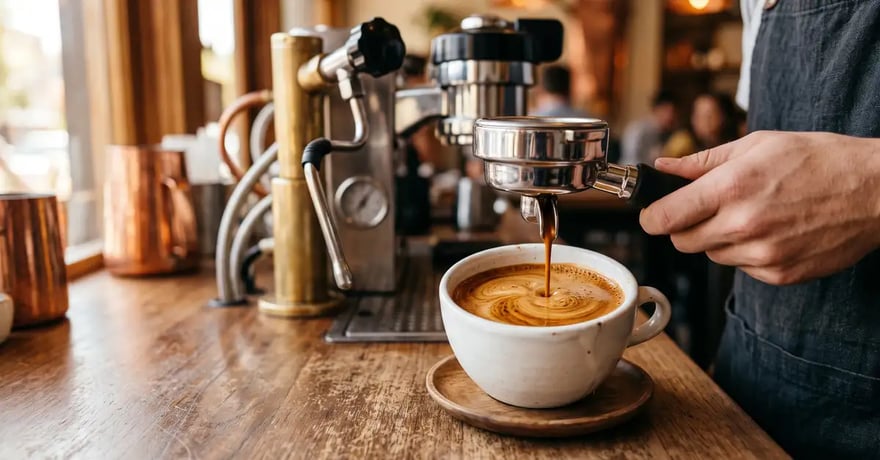
Espresso is a brewing method, not a bean, a roast, or a flavor — finely ground coffee forced through by roughly 9 bar of pump pressure in about 25–35 seconds, producing a small, concentrated shot topped with crema. Any coffee bean can be pulled as espresso; what makes it espresso is the pressure, the grind, and the time, not what's in the bag.
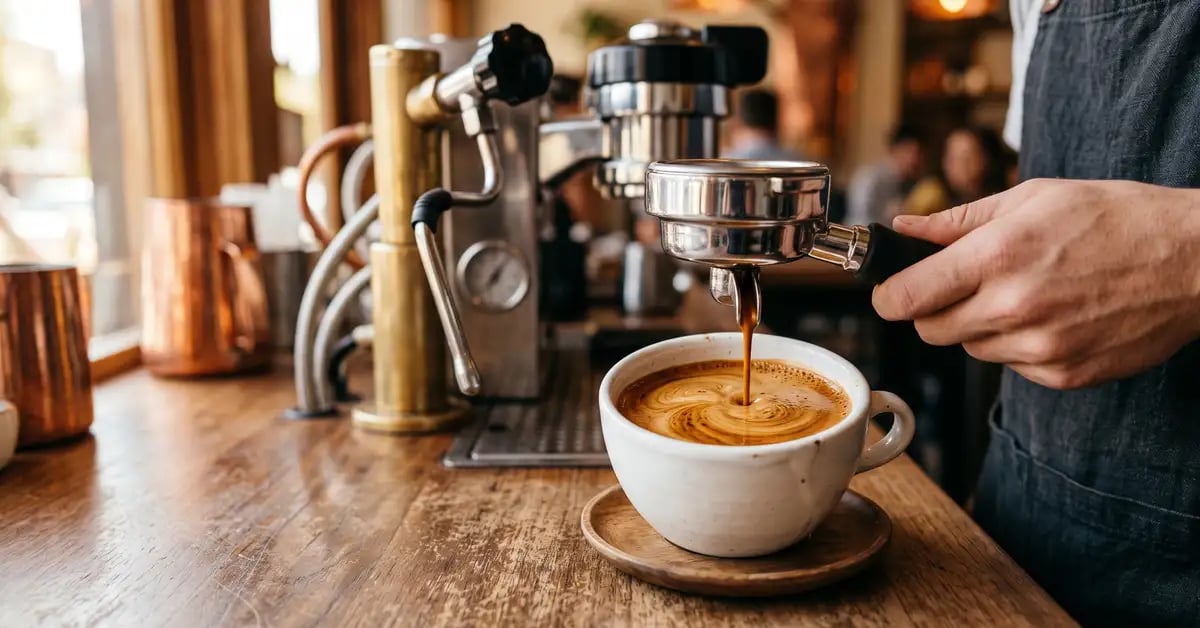
Espresso vs. "regular" coffee
The biggest technical difference is pressure. Espresso forces hot water through the grounds at roughly 9 bar using a pump, while drip and other gravity-based methods just let water fall through the grounds at essentially no pressure at all. That single difference drives everything else: espresso needs a much finer grind — about the texture of table salt — to create enough resistance for the pump to build pressure against, and the whole brew finishes in roughly 25–35 seconds rather than several minutes.
It's also where the "espresso has more caffeine" idea comes from, and it's true in one sense and false in the other. Ounce for ounce, espresso is far more concentrated: about 63 mg of caffeine in a 1-ounce shot, versus roughly 12 mg per ounce of drip coffee. But a typical serving flips that comparison around — an 8-ounce cup of drip coffee carries about 96 mg of caffeine, more than a single 1-ounce espresso shot's 63 mg, simply because the serving is eight times larger. A double espresso shot (roughly 125 mg) gets closer to a full cup of drip, but a single shot usually doesn't beat it. Figures per Mayo Clinic's caffeine-content reference, which draws on FDA and USDA data — actual content varies by bean, roast, and how a given café or machine pulls the shot.
| Espresso | Drip coffee | |
|---|---|---|
| Pressure | ~9 bar (pump) | None (gravity) |
| Grind | Fine (table-salt texture) | Medium-coarse |
| Brew time | 25–35 seconds | 3–5 minutes |
| Typical serving | 1 oz (single shot) | 8 oz cup |
| Caffeine per serving | ~63 mg | ~96 mg |
What crema is and why it forms
Crema is the reddish-brown, tan-flecked foam that sits on top of a properly pulled espresso shot. It forms because the beans' natural oils and dissolved CO₂ — released during roasting — get forced into tiny bubbles under the shot's high pressure and short, fast extraction, something gravity-brewed methods never generate. Crema is a decent visual signal of a fresh, well-pulled shot — stale beans have already released most of their CO₂ and produce thin, patchy crema — but it isn't a reliable flavor guarantee by itself: a shot can carry a full crema cap and still taste sour or bitter if the grind or dose is off.
What espresso is NOT
Not a bean, origin, or roast level. Any coffee bean — light, medium, or dark roast, from any origin — can be pulled as espresso. "Espresso roast" on a bag is a roaster's label for beans they think work well under pressure, not a requirement.
Not automatically "stronger-tasting" than drip in every sense. It's more concentrated per ounce and more intense up front, but "stronger" depends on what's being measured — total caffeine per typical serving often favors a full cup of drip coffee, not a single shot (see the numbers above).
Not exclusively made on a dedicated espresso machine. A moka pot or certain manual lever devices can approximate a concentrated, espresso-style shot, but neither reaches true 9-bar pump pressure or produces genuine crema — they're strong, concentrated coffee in their own right, not espresso by the strict definition.
How it's made, at a glance
The short version: grind coffee fine, dose about 18 g into the portafilter, lock it into a machine that forces water through at roughly 9 bar, and stop the shot at about 36 g of liquid somewhere in a 25–35 second window. For the full step-by-step recipe — dialing in grind, tamping, troubleshooting a sour or bitter shot — see our how to make espresso guide, and our how to dial in espresso guide for fixing a shot that's off.
Getting started
If you don't have a machine yet, see our best espresso machines picks, or best espresso machines for beginners if this is your first one. Already have a machine and want the full brewing method? Head to how to make espresso. Want to turn that shot into a milk drink? See how to make a latte at home and how to froth milk. Prefer decaf? Our best decaf coffee for espresso guide covers whole-bean picks that still pull real crema. For the wider picture — choosing a machine, understanding extraction, dialing in your first shot — start at our Home Espresso beginner's guide.
Frequently Asked Questions
Is espresso stronger than coffee?
It depends what you mean by "stronger." Espresso is far more concentrated per ounce and tastes more intense up front. But a typical 8-ounce cup of drip coffee usually contains more total caffeine — about 96 mg — than a single 1-ounce espresso shot's 63 mg, simply because the serving is larger.
Is espresso just strong coffee?
No — espresso is a specific brewing method, not a strength setting. It uses a fine grind and roughly 9 bar of pump pressure to extract a small, concentrated shot in 25–35 seconds, which produces crema and a different mouthfeel than simply brewing drip coffee stronger.
Does espresso have more caffeine than coffee?
Per ounce, yes — espresso is more concentrated. Per typical serving, usually not: a 1-ounce espresso shot has about 63 mg of caffeine, while an 8-ounce cup of drip coffee has about 96 mg, per Mayo Clinic's caffeine-content reference. A double espresso shot (about 125 mg) comes closer to a full cup.
Can you make espresso without a machine?
Not true espresso — that requires roughly 9 bar of pump pressure, which only a dedicated espresso machine or certain manual lever devices can generate. A moka pot gets close in concentration using steam pressure (around 1–1.5 bar), but it's a different method that doesn't produce true crema. For a portable option built specifically for espresso-style shots, see our best AeroPress alternatives guide, which covers the Staresso SP-200 hand-pump brewer and AeroPress attachments like the Fellow Prismo.
What is crema, and does all espresso have it?
Crema is the reddish-brown foam on top of a properly pulled shot, formed when the beans' natural oils and dissolved CO₂ get forced into tiny bubbles under high pressure. A shot can still have decent crema and taste sour or bitter if the grind or dose is off, and stale beans produce thinner, patchier crema — so it's a useful freshness signal, not a flavor guarantee.
Café Grade is research-led. This explainer draws on established espresso brewing-science references and Mayo Clinic's published caffeine-content data (itself sourced from FDA and USDA figures). Written by Michael Probert.