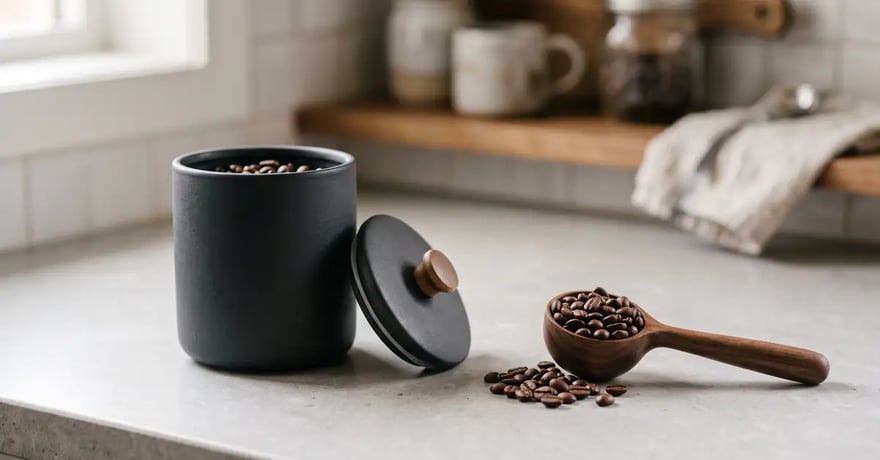
Store coffee beans in an opaque, airtight container in a cool, dark, dry spot — and buy only what you'll use in one to two weeks. Coffee's four enemies are air, moisture, light and heat; keep all four away and whole beans stay fresh far longer than ground. For stashes you won't finish soon, freeze beans in airtight single-use portions. Skip the fridge, and always grind just before you brew.
The four enemies of fresh coffee
- Air (oxygen): Oxygen oxidises the oils and aromatics that give coffee its flavor, staling beans over days and weeks. This is the single biggest factor — an airtight seal matters most.
- Moisture: Humidity degrades beans and can invite mold, and it's why the fridge (damp, full of odors) is a poor choice.
- Light: UV light breaks down flavor compounds and oils, so clear jars on a sunny shelf are a mistake — use opaque containers.
- Heat: Warmth accelerates staling and can draw oils to the surface; keep coffee away from the oven, stovetop and sunny windows.
The everyday method: opaque, airtight, cool and dark
For coffee you'll drink within a couple of weeks, an opaque airtight canister — ceramic, stainless steel, or glass kept in a dark cupboard — is all you need. Ceramic, steel and glass all block light well; if your container is clear, keep it in a closed cabinet. Fill it as full as you reasonably can to reduce trapped air, and store it somewhere cool and dry, roughly 60–75 °F, away from heat sources. Canisters with a one-way degassing valve are a nice bonus for very fresh, recently roasted beans, which release CO₂ for the first week or two.
Freezing coffee for the long term
If you've bought more than you'll use in two weeks, the freezer is the best way to preserve it — done properly:
- Divide beans into single-use portions before freezing, so you only ever thaw what you'll brew.
- Use vacuum-sealed bags or airtight containers to keep out air and moisture, and store them in the coldest, most stable part of the freezer.
- Never refreeze beans after thawing — moisture cycles ruin them.
- Let a portion come to room temperature before opening the bag, so condensation forms on the outside, not on your beans.
Freezing pauses staling; it doesn't reverse it, so freeze beans while they're fresh, not once they've already gone flat.
Whole bean vs ground — and how long coffee lasts
Whole beans keep their flavor far longer than pre-ground, because grinding exposes vastly more surface area to oxygen — ground coffee can begin to taste flat within hours to a few days. That's why buying whole bean and grinding just before you brew is the highest-impact habit for fresh coffee. As a rough guide, whole beans are at their best within about two to four weeks of the roast date once opened (a few days longer for dark roasts stored well), while ground coffee is best used within days. Buy in quantities you'll finish in that window, and check the roast date rather than a distant best-by date.
Storing beans well only pays off if you grind and brew them right, too. See our best burr grinders and coffee-to-water ratio guides, browse the best coffee beans and best single-origin beans, or explore the Beans & Subscriptions hub.
Common storage mistakes to avoid
- Keeping beans in a clear jar on the counter: Light and heat both degrade coffee. A clear jar by the kettle or a sunny window is one of the fastest ways to stale beans — move it to an opaque container in a cupboard.
- Storing in the fridge: The fridge is humid, full of odors coffee absorbs, and prone to condensation each time you open the door. It's worse than a cool cupboard, not better.
- Grinding a week's worth in advance: Pre-grinding to save time trades away most of your freshness. Ground coffee stales in hours to days; grind per brew instead.
- Buying huge bags you can't finish: A bulk bag looks economical but goes flat before you reach the bottom. Buy for one to two weeks, or freeze the surplus in portions immediately.
- Leaving the original bag open and unclipped: Once opened, a folded-over bag lets in air and moisture. Either seal it tightly (clip or press the valve out) or decant into an airtight canister.
Frequently Asked Questions
What is the best way to store coffee beans?
Keep them in an opaque, airtight container in a cool, dark, dry cupboard, away from air, moisture, light and heat. Fill the container to reduce trapped air, and buy only what you'll use within one to two weeks. Grind just before brewing rather than storing pre-ground coffee.
Should you store coffee in the fridge?
No. Refrigerators are humid and full of strong odors that coffee readily absorbs, and the temperature swings cause condensation. A cool, dark cupboard is better for everyday storage, and the freezer — in airtight, single-use portions — is better for long-term storage.
Can you freeze coffee beans?
Yes, and it's the best method for long-term storage. Freeze fresh beans in vacuum-sealed or airtight single-use portions, keep them in the coldest, most stable part of the freezer, never refreeze after thawing, and let each portion reach room temperature before opening to avoid condensation.
How long do coffee beans stay fresh?
Whole beans are at their best within roughly two to four weeks of the roast date once opened, when stored well. Ground coffee stales much faster — often within days — because grinding exposes far more surface area to oxygen. Always check the roast date and buy accordingly.
Is it better to store whole beans or ground coffee?
Whole beans, by a wide margin. Grinding dramatically increases the surface area exposed to air, so ground coffee loses aroma and flavor within hours to days. Store whole beans airtight and grind only what you need right before brewing.
Café Grade is research-led. Storage guidance here reflects the consensus of sources including the National Coffee Association and Consumer Reports. Written by Michael Probert.