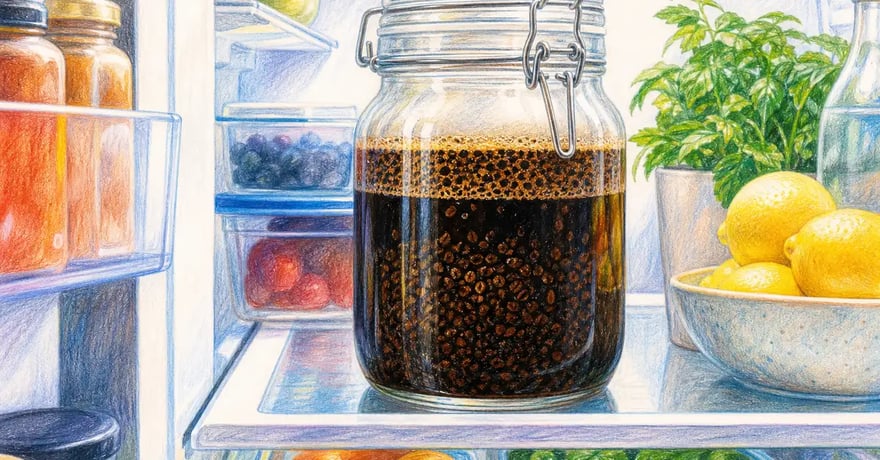
Quick answer: Combine 1 part coarsely ground coffee with 4–5 parts cold water (for concentrate) or 8–12 parts for ready-to-drink strength. Steep 12–24 hours in the refrigerator, strain through a fine filter, and store for up to two weeks. Hands-on time: under 10 minutes. Waiting time: 12–24 hours.
Cold brew coffee is one of the simplest brewing methods you can do at home — no heat, no precise timing, and almost impossible to over-extract in the traditional sense. The result is a smooth, low-acid concentrate that keeps for two weeks in the fridge and forms the base for iced coffee, lattes, cocktails, and more. This guide covers the complete method, the best ratios, and how to fix the most common mistakes.
What You'll Need
- A large jar, pitcher, or dedicated cold brew maker
- Coarsely ground coffee — the coarsest setting on your grinder
- Cold or room-temperature water (never hot)
- A fine-mesh strainer or cheesecloth (for primary filter)
- A paper coffee filter or paper towel (for secondary filter)
- A refrigerator and 12–24 hours of patience
On equipment: A mason jar works perfectly for cold brew. Dedicated cold brew makers — like those from Toddy, OXO, or Takeya — add convenience with built-in strainers, but they don't improve the taste. Start with a jar; upgrade only if you make cold brew frequently.
Cold Brew Ratios: Concentrate vs. Ready-to-Drink
Cold brew is commonly made in two strengths:
| Style | Ratio (coffee:water) | How to serve |
|---|---|---|
| Concentrate | 1:4 or 1:5 (e.g., 100g in 400–500ml) | Dilute 1:1 with water or milk to serve |
| Ready-to-drink | 1:8 to 1:12 (e.g., 100g in 800ml–1L) | Serve directly over ice |
Concentrate is more practical — it takes up less fridge space, keeps longer, and lets you adjust strength on the fly. This guide uses the concentrate method (1:5 ratio), which most cold brew regulars prefer.
How to Make Cold Brew Coffee: Step-by-Step
Step 1: Grind Your Coffee
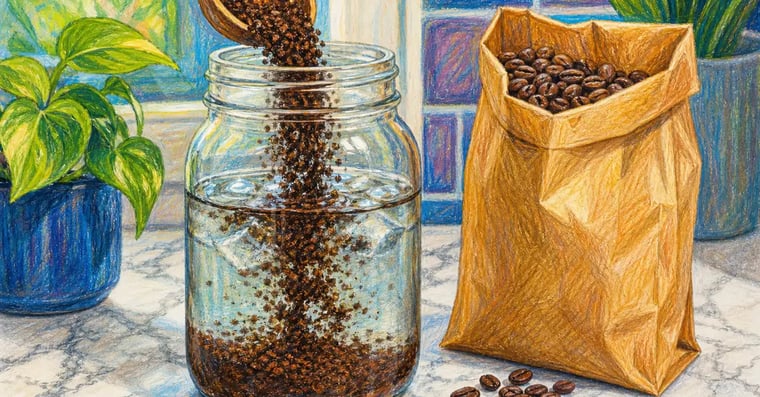
Grind your coffee as coarsely as your grinder allows — roughly the texture of breadcrumbs or coarse sea salt. This is significantly coarser than you'd use for any hot brewing method. Cold brew uses a very long steep time to compensate for the absence of heat; a fine or medium grind over 24 hours would produce bitter, over-extracted results. Extra coarse grind is the foundation of good cold brew.
Step 2: Combine Coffee and Water
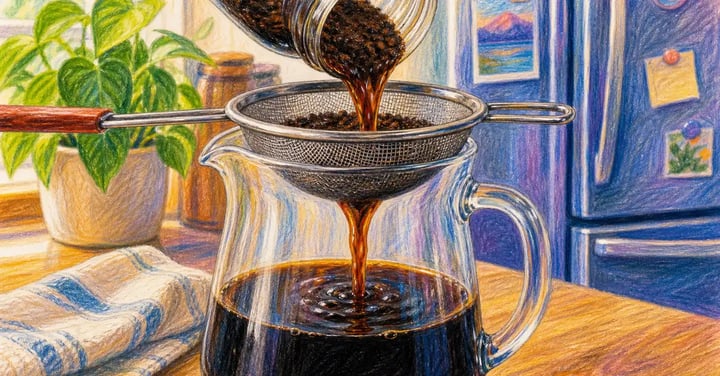
Add the ground coffee to your jar or container. Pour in cold water, ensuring all the grounds are wet. A good practice is to pour about half the water, stir to mix, then add the rest. This ensures even saturation and prevents dry pockets of coffee that won't extract properly.
For a 1:5 concentrate using a standard 32oz mason jar: use 100g (about 1 cup) of coffee and 500ml (about 17oz) of water. This will yield approximately 350–400ml of finished concentrate after filtering — enough for 4–8 cups when diluted.
Do not use warm or hot water. Hot water will extract differently (and faster), producing a brew that tastes more like heated regular coffee rather than the smooth, mellow character of true cold brew.
Step 3: Cover and Refrigerate
Cover the jar with a lid, plastic wrap, or a cloth secured with a rubber band. Place in the refrigerator and leave it alone for 12–24 hours.
Steep time guide:
- 12 hours: Lighter, brighter, more delicate flavor — especially good with light roasts
- 18 hours: Balanced, smooth — the sweet spot for most coffees
- 24 hours: Rich, bold concentrate — works well with dark roasts
You can also steep at room temperature for 8–12 hours if you're in a hurry. Room-temp cold brew extracts slightly faster but some people find it more bitter than refrigerator cold brew.
Step 4: Strain Twice
The first strain removes the bulk of the grounds. Place a fine-mesh strainer or cheesecloth over a second container and pour the cold brew through slowly. Let gravity do the work — don't squeeze or press the grounds, which can force bitter compounds through.
The second strain catches fine particles that cloud the coffee. Line your strainer with a paper coffee filter (or fold two layers of cheesecloth) and pour the strained liquid through again. This double-filtering is what gives commercial cold brew its characteristic clarity and silky texture. Skip it and your cold brew will taste fine but look murky and have more sediment in the cup.
Step 5: Store and Serve
Transfer your finished cold brew concentrate to a clean jar or bottle and refrigerate. Properly filtered cold brew keeps for up to two weeks in the refrigerator without meaningful degradation in flavor. If you notice off flavors or mold, discard — this is rare with clean equipment but can happen if the jar wasn't washed thoroughly.
To serve: pour concentrate over ice and dilute with equal parts water, milk, or oat milk. For a quick iced latte, use 1 part cold brew concentrate to 2 parts milk of your choice over a full glass of ice.
Cold Brew Tips for Better Results
5 Tips for Better Cold Brew at Home
- Grind extra-coarse — the biggest improvement most beginners can make. Under-coarse grind = over-extraction even with cold water.
- Double-filter — mesh first, then paper. The second filter is what produces that clean, smooth texture.
- Start with medium or dark roasts — cold extraction suppresses some acidity, making light roasts taste flat to some palates. Medium roasts tend to shine brightest in cold brew.
- Label your jar with the date — cold brew keeps for two weeks, but it's easy to lose track. Write the brew date on a piece of tape on the jar.
- Make more than you think you need — 500ml of concentrate goes fast. Doubling the batch takes no extra effort and means you're never out.
Troubleshooting Cold Brew Problems
| Problem | Likely Cause | Fix |
|---|---|---|
| Tastes bitter or harsh | Grind too fine, steeped too long, or used hot water | Coarsen grind; reduce steep to 12–16h; use cold water only |
| Tastes weak or watery | Too much water (ratio off), too short a steep, or grind too coarse | Use 1:5 ratio; steep at least 16 hours; medium-coarse grind |
| Cloudy or gritty | Only filtered once, or filter too coarse | Double-filter: mesh then paper coffee filter |
| Flat, muted flavor | Stale coffee or very light roast losing its nuance in cold extraction | Use fresher coffee; try a medium roast for cold brew |
How We Researched This Guide
Cold brew parameters in this guide are based on established industry practices and published food science on cold extraction. The ratio, steep time, and acidity characteristics (cold brew is widely reported as 60–70% less acidic than hot coffee — per research published in Scientific Reports, 2017) are consistent with peer-reviewed references and SCA cold brew guidance. We don't operate a physical testing lab — recommendations are research-led.
Looking for the Right Cold Brew Maker?
See our research-led picks for the best cold brew coffee makers of 2026 — from simple mason jar setups to dedicated Toddy and OXO systems, compared at every price point.
See the Best Cold Brew Makers →Frequently Asked Questions About Cold Brew Coffee
What's the best coffee to use for cold brew?
Medium to dark roasts tend to produce the most satisfying cold brew. Cold extraction suppresses some of the brightness and acidity that makes light roasts distinctive — a very light roast often tastes flat or thin in cold brew. Medium roasts with chocolate, caramel, or nut notes translate beautifully to cold brew's natural sweetness. Dark roasts produce bold, intense concentrate. A medium-dark Guatemalan or Colombian tends to be an excellent cold brew bean.
How long does homemade cold brew last in the fridge?
Up to two weeks when properly filtered and stored in a clean sealed container. The double-filtration step is key — fine particles left in the brew continue extracting and fermenting, shortening shelf life. Cold brew stored without a second paper filter pass typically tastes best within 5–7 days.
Is cold brew stronger than regular coffee?
Cold brew concentrate is significantly stronger than regular coffee — often 2–3x the caffeine concentration. It's designed to be diluted before drinking. A typical serving (2oz concentrate + 4oz water or milk) ends up with roughly the same caffeine as a standard 8oz cup of hot drip coffee. If you're drinking undiluted concentrate, you're getting a very high dose.
Can I use pre-ground coffee for cold brew?
Yes, but check the grind size. You need coarsely ground coffee, and most pre-ground coffee is ground for drip (medium) — which is too fine for cold brew and will produce over-extracted, bitter results. Look for coffee specifically labeled "coarse grind" or "French press grind," or grind whole beans at the coarsest setting on an in-store grinder.
Can I make hot coffee with cold brew concentrate?
Yes — add boiling water instead of cold water and ice. Use 1 part concentrate to 2 parts hot water for a quick cup. It won't taste exactly like hot-brewed coffee (the flavor profile is naturally smoother and less bright), but it's a great option when you want hot coffee without waiting for a fresh brew.
Sources: Toddy cold brew acidity study; Scientific Reports 2017 coffee pH analysis; Specialty Coffee Association cold brew guidelines; USDA food safety guidelines for cold-prepared beverages. best coffee beans for cold brew