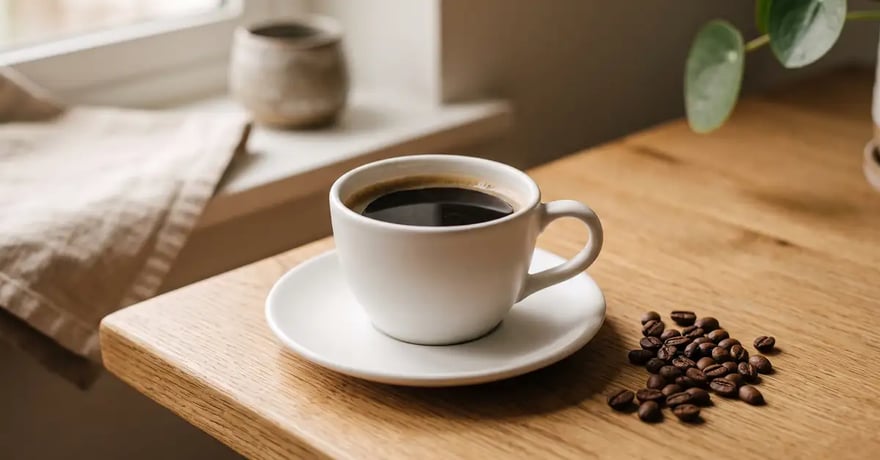
Decaf coffee is not caffeine-free. An 8 oz cup typically contains about 2–15 mg of caffeine, versus roughly 95 mg in the same size cup of regular coffee. That's because the FDA standard requires at least 97% of the caffeine to be removed — not 100%. For almost everyone that small residual is negligible, but if you're highly sensitive, pregnant, or limiting caffeine for a health reason, the amount can add up across several cups, so it's worth knowing the numbers and checking with your doctor.
Decaf vs regular: the numbers
| Drink | Approx. caffeine |
|---|---|
| Decaf coffee (8 oz) | ~2–15 mg |
| Regular coffee (8 oz) | ~95 mg (varies widely) |
| Espresso (1 shot, ~1 oz) | ~63 mg |
| Decaf espresso (1 shot) | ~3–16 mg (roughly, by method) |
Figures are typical ranges; actual caffeine varies with bean, roast, dose, brew method and serving size. Regular coffee in particular ranges widely (often 70–140 mg per 8 oz).
Why decaf still has some caffeine
In the US, coffee can be labeled "decaffeinated" once at least 97% of the original caffeine has been removed. Because no commercial process strips out 100%, a small amount always remains — typically that 2–15 mg per cup. So "decaf" means almost caffeine-free, not caffeine-free. Across a single cup that's tiny; across four or five cups it can approach the caffeine in one regular cup, which is worth keeping in mind if you're deliberately minimizing intake.
The method changes how little is left
All common decaffeination methods remove roughly 97–99.9% of the caffeine, but the best can go further. The Swiss Water Process and CO₂ (carbon dioxide) extraction often reach around 99.9% removal — the lowest residual caffeine — while solvent-based methods sit near the 97% floor. If you want the least caffeine possible, look for beans labeled Swiss Water or CO₂ decaf. For the full picture of how each method works and tastes, see our decaf coffee processes explainer.
Who should pay attention to decaf's caffeine?
For most people, the trace caffeine in decaf is nothing to worry about. It matters more if you're highly caffeine-sensitive, drinking decaf specifically to sleep, pregnant or breastfeeding, or managing a condition where caffeine has been restricted. In those cases, the residual adds up across multiple cups, and low-residual Swiss Water or CO₂ decaf is the safer bet. This is general information, not medical advice — if caffeine intake matters for your health, confirm what's right for you with your doctor.
How to keep your caffeine as low as possible
- Choose Swiss Water or CO₂ decaf: These methods leave the least residual caffeine (around 99.9% removed), so they're the lowest-caffeine options on the shelf.
- Watch your cup count: One cup of decaf is trivial; four or five can approach a single regular cup. If you're limiting caffeine, count cups, not just the label.
- Mind serving size: A big mug is two or three "cups." The 2–15 mg figure is per 8 oz, so a 16 oz travel mug can hold roughly double.
- Remember other sources: Tea, cola, chocolate and some medications also contribute caffeine, so decaf is only one part of your daily total.
Is decaf a good choice?
For anyone who loves the taste and ritual of coffee but wants far less caffeine, modern decaf is a genuinely good option — today's Swiss Water and CO₂ decafs taste much better than the reputation decaf earned decades ago. It lets you enjoy an afternoon or evening cup without the jitters or sleep disruption a regular coffee might cause. Whether decaf is the right choice for your health specifically depends on your circumstances, so treat this as general information and confirm anything caffeine-related with your doctor.
Frequently Asked Questions
Is decaf coffee completely caffeine-free?
No. Decaf must have at least 97% of its caffeine removed under the FDA standard, but no process removes 100%. An 8 oz cup typically still contains about 2–15 mg of caffeine, compared with roughly 95 mg in regular coffee.
How much caffeine is in a cup of decaf?
Usually about 2–15 mg per 8 oz cup, depending on the bean and the decaffeination method. That's a small fraction — roughly 2–3% — of the caffeine in a regular cup.
Which decaf has the least caffeine?
Coffees decaffeinated by the Swiss Water Process or CO₂ extraction tend to have the lowest residual caffeine, often reaching around 99.9% removal, versus about 97% for some solvent-based methods.
Can decaf keep you awake?
For most people, no — the trace caffeine is too small to have much effect. But if you're very caffeine-sensitive or drink several cups late in the day, the residual can add up. Choosing low-residual Swiss Water or CO₂ decaf helps, and you can check with your doctor if sleep is a concern.
Is decaf safe during pregnancy?
Decaf contains only a small amount of caffeine, but guidance on total caffeine during pregnancy varies and it can accumulate across drinks and foods. This is general information rather than medical advice — talk to your doctor or midwife about the right total caffeine limit for you.
Want low-caffeine beans that still taste good? See our picks for the best decaf coffee beans and the best decaf coffee for espresso.
Café Grade is research-led. Caffeine figures and the 97% standard here reflect sources including the National Coffee Association and FDA labeling rules. This article is general information, not medical advice; consult your doctor about caffeine and your health. Written by Michael Probert.